
Musics, Movies
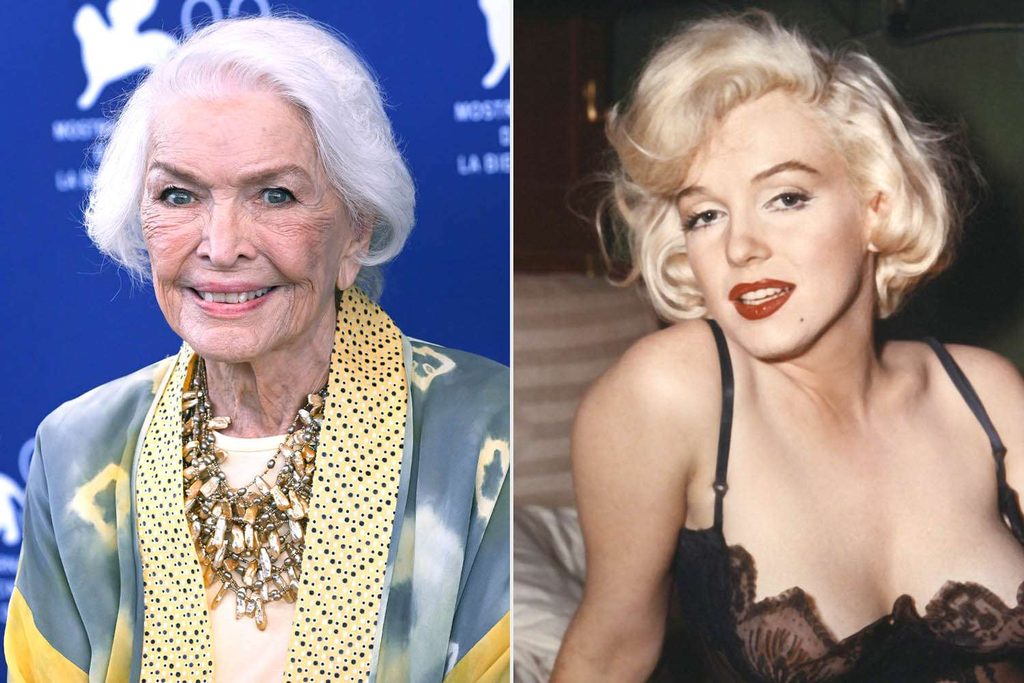
Flesh Impact and Whispered Secrets: Inside Ellen Burstyn’s Luminous Portrayal of Marilyn Monroe at 100
Oct
1. The Century Mark of an Icon: Reimagining Marilyn Monroe in Maggie Gyllenhaal’s Flesh Impact
In the vast, immortal pantheon of global cinema, certain figures cease to exist merely as historical actors and become indelible mythological constellations upon the human consciousness. Foremost among these eternal apparitions is Marilyn Monroe. Born Norma Jeane Mortenson in the crowded wards of Los Angeles County Hospital on June 1, 1926, Monroe existed at the dazzling, catastrophic nexus of mid-twentieth-century American culture: a luminescent goddess of radiant sensuality, tragic vulnerability, and unmatched screen magnetism whose abrupt, agonizing demise in August 1962 at the tender age of thirty-six permanently arrested her in the collective amber of youth. For over six decades, the world has known only one version of Marilyn: the frozen martyr of Hollywood’s patriarchal studio machinery, forever trapped in fluttering white dresses, breathless whispers, and the suffocating prison of perpetual beauty.
Yet, as the cultural calendar arrived at the centenary year of 2026—a monumental milestone marking what would have been Marilyn Monroe’s one-hundredth birthday—a breathtaking, radical cinematic experiment arrived to fundamentally shatter that tragic paradigm. Premiering out of competition to thunderous critical acclaim at the prestigious Venice International Film Festival, the visionary short film Flesh Impact dared to imagine what the world was cruelly denied: a reality in which Marilyn Monroe survived the ravenous wolves of Hollywood, outlived the suffocating toxicity of her era, and grew into a wise, majestic, and serene centenarian.
The global centenary of Monroe’s birth ignited widespread cultural retrospectives across major cinematic institutions, from the Cinémathèque Française in Paris and the British Film Institute in London to retrospective galas at Lincoln Center in New York. Yet while museum exhibits showcased archival evening gowns, diamond jewelry, and pristine photographic prints, the artistic community grappled with a lingering, melancholic absence: the profound tragedy that the real woman had never been permitted to grow old, to speak with the authority of elder wisdom, or to reflect upon her legacy with the peaceful detachment of a long life well-lived.
At the helm of this audacious philosophical undertaking is Academy Award-nominated filmmaker and auteur Maggie Gyllenhaal. Following her triumphant directorial debut with The Lost Daughter and her sweeping reimagining of The Bride!, Gyllenhaal approached Monroe not as a commodified tabloid tragedy or an object of retrospective pity, but as a complex, brilliant dramatic artist whose artistic voice was constantly silenced by the men who claimed to adore her. Partnering with celebrated French cinematographer Hélène Louvart, Gyllenhaal shot the project using a dual-celluloid approach: grainy, hyper-saturated 16mm stock to evoke the flickering intimacy of mid-century home movies, transitioning into lush, luminous 35mm film that captures the physical topography of age with breathtaking sculptural beauty.
The visual design of Flesh Impact deliberately dismantles the glossy, airbrushed veneer that Hollywood historically imposed upon female stars. Cinematographer Hélène Louvart employed bespoke vintage prime lenses, allowing the warm Mediterranean sunlight of the Venice Lido and coastal interiors to graze Burstyn’s face naturally, catching every line, silver curl, and thoughtful contour with painterly reverence. Far from obscuring the natural effects of time, Gyllenhaal’s camera worships them as badges of honor, survival, and profound aesthetic beauty. When asked about this approach, Gyllenhaal noted that our culture has been conditioned to view aging in women as a tragedy to be concealed, whereas in Flesh Impact, age is elevated to its rightful station: the ultimate triumphant act of artistic endurance.
The reception at the 83rd Venice International Film Festival underscored the hunger for narratives that honor cinematic foremothers. In an era dominated by algorithmic franchises and digital de-aging visual effects, watching an actual nonagenarian master command the screen with quiet, unhurried grace felt like a revolutionary act of cinematic defiance. The festival jury and audiences alike recognized that Gyllenhaal was not merely making a short film; she was constructing an alternate emotional timeline—a space where Marilyn Monroe was finally permitted to exhale, lay down the crushing burden of the blonde bombshell, and simply be herself.
To bring this counter-factual reverie to life, Gyllenhaal constructed a dual-portrait across the continuum of time. While Dakota Johnson embodies Monroe at the dazzling zenith of her 1950s box office dominance—working extensively with movement and vocal coaches to capture the delicate, breathy cadence and radiant physical poise of Monroe during the filming of Some Like It Hot—the true emotional anchor of the film, and the casting coup of the century, belongs to ninety-three-year-old Oscar-winning legend Ellen Burstyn, who portrays Marilyn at one hundred years old.
The title Flesh Impact takes its poetic lineage directly from an evocative phrase coined by mid-century film theorists and cinematographers to articulate the singular, hypnotic physics of Marilyn Monroe’s screen presence. When Monroe appeared on thirty-five-millimeter celluloid in masterpieces like Gentlemen Prefer Blondes, Some Like It Hot, and The Misfits, she did not merely reflect light; she seemed to emit an incandescent, tactile heat that collapsed the physical distance between spectator and screen. Viewers did not merely watch Marilyn; they felt her presence with the shocking, intimate immediacy of warm skin. By reclaiming this phrase for a film centered on a woman in her tenth decade, Gyllenhaal and Burstyn perform an act of cinematic alchemy: celebrating the physical and spiritual reality of an aged woman’s body as a vessel of radiant, enduring grace.
For Ellen Burstyn, stepping into the shoes of the world’s most recognizable woman at the century mark was an assignment that arrived with equal parts amusement, humility, and profound artistic reverence. In an exclusive interview with Entertainment Weekly, Burstyn reflected with characteristic wit on the sheer historical rarity of her casting. ‘Maggie Gyllenhaal just asked me,’ Burstyn recalled with a soft chuckle. ‘Now, how she got the idea? Well, the fact that I’m playing Marilyn at 100, because if she lived she would be 100 this year, and there aren’t many actresses in their 90s that are still working. So I don’t know that she had that much choice. But she told me that she had always admired my work, so I was very happy that she did.’ In an industry notoriously plagued by ageism, where actresses over forty are routinely discarded, Burstyn’s commanding presence on screen at ninety-three stands as a triumphant monument to creative longevity, lending Marilyn’s speculative twilight years the profound, unshakeable authority that only six decades of master-level craftsmanship could ever bestow.
2. The Masseur’s Table: The Unlikely Confidant Who Bridged Two Hollywood Eras
While audiences and critics at Venice were mesmerized by the startling emotional authenticity of Burstyn’s performance, the true heart of this cinematic triumph lies in an extraordinary, deeply intimate real-world connection that linked Ellen Burstyn to Marilyn Monroe long before Maggie Gyllenhaal ever called ‘action.’ It is a connection forged not in studio boardrooms, glamorous industry galas, or shared film sets, but in the quiet, hushed sanctity of a private Manhattan massage room through a mutual, trusted confidant.
Speaking with Entertainment Weekly, Burstyn pulled back the velvet curtain of Hollywood history to reveal an astonishing biographical revelation: for decades following Monroe’s tragic death, Burstyn shared the exact same personal masseur who had served as Marilyn’s primary physical healer and most trusted emotional sounding board during the turbulent final years of her life.
‘I had an odd connection to her,’ Burstyn revealed with tender intimacy. ‘My masseur was hers, and he was her confidant, and they were very close. And when he became my masseur, she was already gone. But I would lie on the table and hear Marilyn stories for years, so I knew a lot about her.’
To understand the profound psychological significance of this connection, one must understand the unique, sacred nature of bodywork within the high-stress crucible of professional acting, particularly in mid-century America. In the 1950s and 1960s, Hollywood studio contract players lived under relentless, suffocating surveillance. Studio fixers, publicists, gossip columnists like Hedda Hopper and Louella Parsons, and predatory photographers monitored their every public movement, dictating their wardrobe, their dating partners, and their bodily weight down to the ounce. In such an intrusive, paranoia-inducing environment, professional therapists and somatic bodyworkers were among the vanishingly few individuals with whom stars could let down their guard without fear of leaks or studio betrayal.
For Marilyn Monroe—a woman whose physical anatomy was relentlessly sexualized, surveyed, and commodified by millions of strangers—her masseur was far more than a physical therapist; he was a safe harbor of non-judgmental empathy. Week after week, away from the demanding glare of directors and the suffocating expectations of studio executives, Marilyn poured out her soul on his table. She spoke of her desperate yearning for intellectual respect, her profound loneliness amidst international adoration, her private struggles with insomnia, and her quiet, unshakeable ambition to transcend the blonde bombshell caricature.
Through these private sessions, the masseur bore witness to the unvarnished intellectual life of Marilyn that studio public relations deliberately suppressed. He recounted to Burstyn how Marilyn would arrive with dog-eared paperbacks of James Joyce’s Ulysses, Sigmund Freud’s clinical essays, and poetry collections by Rainer Maria Rilke tucked beneath her arm. He spoke of her immense, quiet philanthropy—how she would slip away without press entourages to visit sick children in municipal wards, sitting beside hospital beds for hours simply holding hands with frightened orphans because she remembered with burning clarity what it felt like to be a lonely ward of the state.
The masseur’s accounts revealed a side of Marilyn that the public rarely glimpsed: her insatiable thirst for literature and intellectual self-actualization. He described to Burstyn how Marilyn would frequently read aloud passages from Thomas Wolfe, Walt Whitman, and Carl Sandburg during their sessions, savoring the rhythm of the words and discussing their philosophical implications. She spoke candidly about the agonizing bifurcation of her identity—the exhausting, perpetual struggle between ‘Norma Jeane,’ the sensitive, contemplative foster child with an innate longing for security, and ‘Marilyn Monroe,’ the synthetic, hyper-sexualized avatar manufactured by 20th Century Fox that she referred to in the third person as ‘her.’
For Ellen Burstyn, absorbing these intimate firsthand accounts across decades was like receiving a private masterclass in empathy. When Burstyn herself was navigating the grueling physical demands of Hollywood stardom—undergoing severe spinal trauma during William Friedkin’s relentless physical staging of The Exorcist or weathering the emotional turbulence of New York theater—the masseur’s quiet reminders of Marilyn’s grace under pressure served as an enduring touchstone. Burstyn understood that beneath the legendary glamour lay an extraordinarily resilient soul who had fought tooth and nail for every shred of artistic autonomy she had ever achieved.
When this trusted confidant subsequently became Ellen Burstyn’s personal masseur in the late 1960s and 1970s, he carried those sacred memories across time. As Burstyn lay upon that very same table throughout the grueling, emotionally exhausting productions of her own legendary career—navigating the demonic possession scenes of The Exorcist or the raw emotional heartbreak of Alice Doesn’t Live Here Anymore—she was immersed in the private truth of Marilyn Monroe. She learned of Marilyn’s sharp, incisive humor, her boundless intellectual curiosity, her passionate love of literature and poetry, and the profound, sensitive spirit that had been systematically obscured by the Hollywood myth machine.
This intimate oral history was supplemented by Burstyn’s own fleeting, unforgettable real-life glimpse of Monroe during her formative days as a young actress in the mid-1950s. Long before she became a household name, Burstyn was a struggling ingénue working minor television roles when she found herself seated in the audience of a crowded Los Angeles nightclub.
‘I saw her once,’ Burstyn recounted to The Associated Press with breathless clarity. ‘We were both in a nightclub in the audience, and of course, I couldn’t help but look at her; she was so startlingly beautiful. And she caught my eye and… she just nodded at me. And I felt that she recognized me, and I was very early in my career. The fact that she recognized me, I just felt so honored and pleased.’ That silent, luminous nod across a smoke-filled room was a momentary blessing from an icon to a future master—a silent transmission of sisterhood that would gestate for seventy years before blossoming into Flesh Impact.
3. The Sacred Alchemy of The Actors Studio: Method Acting, Lee Strasberg, and the Pursuit of Truth
Beyond the shared confidant of the masseur’s table, Ellen Burstyn and Marilyn Monroe are forever united by their deep, transformative allegiance to the single most influential pedagogical institution in American theatrical history: The Actors Studio. Nestled inside a converted Greek Revival church on West 44th Street in the heart of Manhattan’s Hell’s Kitchen, the Studio served as the sacred laboratory where the revolutionary principles of Method acting were forged, refined, and unleashed upon the world under the legendary, intense tutelage of artistic director Lee Strasberg.
For Marilyn Monroe, entering the hallowed halls of The Actors Studio in 1955 was nothing short of an act of open rebellion against the Hollywood oligarchy. At the absolute apex of her commercial bankability, having delivered massive box office smashes for 20th Century Fox with Gentlemen Prefer Blondes and The Seven Year Itch, Monroe staged a daring walkout. Disgusted by the infantilizing, one-dimensional roles assigned to her by studio chieftain Darryl F. Zanuck, and furious at being treated as a brainless visual ornament, Monroe packed her bags, fled to New York, and enrolled in Strasberg’s rigorous private classes.
At the Studio, stripped of makeup, lighting doubles, and studio publicists, Monroe subjected herself to the agonizing, vulnerable exercises of affective memory, animal exercises, and sensory immersion alongside serious stage peers like Paul Newman, Marlon Brando, and Maureen Stapleton. Strasberg was astonished by the raw, untamed depth of Monroe’s emotional instrument, famously declaring that of all the titanic actors he had ever taught, only two possessed an innate, luminous sensitivity that transcended technical instruction: Marlon Brando and Marilyn Monroe.
The defining moment of Monroe’s tenure at the Studio occurred during a legendary 1956 workshop session when she performed scenes from Eugene O’Neill’s Anna Christie, portraying a fallen, weary woman seeking redemption. The hardened, skeptical room of Broadway veterans watched in stunned, pin-drop silence as Monroe laid bare her soul, weeping real tears of devastating heartbreak. Under Strasberg’s guidance, Monroe’s acting deepened into the profound, layered dramatic masterworks seen in Bus Stop (1956) and The Misfits (1961), proving unequivocally that she was an artist of formidable intellect and devastating emotional range.
Strasberg’s rigorous pedagogical methodology demanded an uncompromising dismantling of superficial artifice. In his private classes, he subjected actors to the ‘private moment’ exercise—an emotional trial wherein the performer must recreate in front of an audience an activity they would only ever do in total, unobserved privacy. When Marilyn performed this exercise, peeling back every protective defense mechanism she had constructed since childhood, Strasberg observed an emotional bravery that few performers in history could match. She was willing to expose her deepest insecurities, her anxieties about abandonment, and her profound longing for creative validation in service of psychological authenticity.
A decade later, Ellen Burstyn would undergo her own profound spiritual and professional metamorphosis within those exact same four walls. Burstyn had spent the late 1950s working steadily in Hollywood under various stage names, appearing in lighthearted television westerns, daytime soap operas, and minor studio comedies. In her conversation with EW, Burstyn laughed warmly as she recalled revisiting those early, unformed performances: ‘I recently looked at a TV show where I was on horseback and in a cowboy outfit and a cowboy hat. I played it for my son, and we had such a good laugh. It was just me being a cowboy. It was ridiculous. Everything that I did in that period was just what came naturally. It just wasn’t schooled. It wasn’t deep work. And when I look at it now, I go, ‘Wow! I’m surprised I worked at all.’’
Recognizing that natural instinct was insufficient to sustain true artistic greatness, Burstyn enrolled at The Actors Studio, immersing herself in Strasberg’s rigorous demanding regimen. The experience fundamentally rewired her approach to human psychology, teaching her how to access the deepest reservoirs of personal truth and channel them into performance without defensive posturing. Burstyn studied alongside fellow titans like Al Pacino, Robert De Niro, and Harvey Keitel, learning to view acting not as an exercise in imitation, but as a sacred ritual of psychological archaeology. Armed with the Method, Burstyn embarked upon one of the most creatively astonishing decades in Hollywood history, earning five Academy Award nominations in nine years and cementing her place among cinema’s supreme dramatic interpreters.
When Burstyn arrived at the Studio a decade later, she encountered that same rigorous, unapologetic standard of truth. Strasberg did not tolerate theatrical tricks or easy commercial charm; he demanded that actors excavate their own lived experiences to breathe authentic life into their characters. Burstyn immersed herself in affective memory, learning to harness her own personal grief, joy, and survival instincts. Today, as co-president of The Actors Studio alongside Al Pacino, Burstyn regularly sits in the very chair Lee Strasberg once occupied, mentoring emerging generations of actors and preserving the sanctity of that historic sanctuary where Marilyn Monroe once found her true artistic voice.
Today, Burstyn serves as the esteemed co-president of The Actors Studio alongside fellow cinematic giants Al Pacino and Alec Baldwin, acting as the living custodian of this sacred theatrical lineage. When Burstyn channeled Marilyn Monroe in Flesh Impact, she was not performing an external, superficial impression; she was executing the very same internal, sensory Method exercises that Monroe had practiced in that very same room seventy years earlier. It was an act of profound artistic communion: one Studio master reaching through the mists of time to complete the emotional journey of another.
4. A Century of Survival: Ellen Burstyn’s Resilient Odyssey Through Six Decades of Cinema
To truly appreciate the breathtaking resonance of seeing Ellen Burstyn embody a centenarian Marilyn Monroe, one must stand back in awe of Burstyn’s own miraculous, peerless journey across more than six decades of cinematic history. While Marilyn Monroe’s tragic narrative is defined by the catastrophic brevity of her thirty-six years, Ellen Burstyn’s legacy is defined by an unshakeable, ferocious resilience that has carried her through personal adversity, industry shifts, and patriarchal gatekeeping into her tenth decade of life, where she remains as intellectually vibrant, creatively daring, and fiercely independent as ever.
Burstyn’s golden era in the 1970s permanently altered the cinematic landscape. In Peter Bogdanovich’s 1971 melancholic black-and-white masterpiece The Last Picture Show, Burstyn delivered a devastating, world-weary turn as Lois Farrow, earning her first Oscar nomination. Two years later, she anchored William Friedkin’s 1973 landmark supernatural horror opus The Exorcist as Chris MacNeil, delivering a visceral, emotionally shattering portrait of maternal terror that transformed a genre thriller into a profound meditation on faith, suffering, and maternal love—a performance that resulted in severe, permanent spinal injuries sustained during practical stunt sequences, which Burstyn bore with quiet professional stoicism.
In 1974, Burstyn accomplished what few women in Hollywood history had ever dared to attempt: she took absolute control of her artistic destiny. Discovering Robert Getchell’s unproduced screenplay for Alice Doesn’t Live Here Anymore, Burstyn personally recruited an ambitious young indie director named Martin Scorsese to helm the project, insisting on a grounded, feminist realism that reflected the raw, unvarnished struggles of working-class single mothers. Her transcendent, radiant performance as Alice Hyatt earned her the Academy Award for Best Actress, cementing her status as an uncompromising trailblazer of New Hollywood cinema. A year later, she conquered Broadway in Same Time, Next Year, winning the Tony Award and completing the rare, coveted Triple Crown of Acting.
Burstyn’s insistence on artistic integrity has consistently defied Hollywood’s conventional playbook. When she discovered the script for Alice Doesn’t Live Here Anymore, Warner Bros. executives were initially skeptical of hiring Martin Scorsese, whose prior credit was the gritty, low-budget crime drama Mean Streets. Yet Burstyn recognized Scorsese’s raw, electric cinematic instinct and championed him unconditionally, creating an environment where improv, raw emotional realism, and feminist agency flourished. The result was a watershed moment in American cinema, proving that women’s lived realities—messy, determined, and deeply humorous—could carry both critical acclaim and commercial success.
When the industry inevitably attempted to marginalize her as she entered middle age, Burstyn refused to fade into quiet retirement. In 2000, at sixty-eight years old, she delivered what critics, scholars, and audiences universally recognize as one of the single greatest, most harrowing performances in the history of the medium: Sara Goldfarb in Darren Aronofsky’s psychological tour de force Requiem for a Dream. Her devastating ‘red dress’ monologue—an agonizingly vulnerable exploration of aging, loneliness, television addiction, and the desperate human yearning to be loved—remains a masterclass in screen acting that continues to stun new generations of film lovers.
Her late-career resurgence in Requiem for a Dream similarly obliterated Hollywood conventions regarding aging actresses. Rather than accepting sanitized grandmotherly roles, Burstyn fearlessly threw herself into the darkest depths of human despair, spending hours in heavy prosthetic fat suits and subjecting herself to grueling psychological states that left crew members weeping on set. Her willingness to plunge into the abyss without vanity cemented her standing as one of the bravest performers to ever stand before a camera. Her current audio venture, Poetry Says It Better, represents the serene, luminous culmination of this lifelong quest for truth—a woman who has survived the tempest and emerged with an incandescent, unshakeable peace.
Burstyn’s extraordinary artistic longevity has been nourished by an equally profound spiritual and intellectual curiosity. Over decades of dedicated study, Burstyn immersed herself in Sufi mysticism, Tibetan Buddhism, and classical literature, developing an unshakeable interior equilibrium that protected her from the toxic narcissism of the entertainment industry. This spiritual depth is vividly displayed in her newly released audiobook anthology Poetry Says It Better: Poems to Help You Wake Up. Curating a magnificent collection of her favorite literary verses accompanied by deeply personal, philosophical commentary, Burstyn explores the transformative power of language as a spiritual compass.
As Burstyn eloquently explained to EW: ‘Poets speak from an inner place, and their choice of metaphors also speaks about who they are and how they see the world. I feel poets when I read them. I feel the people that they are. I find that poets have a way of not only loving words and the expression of feelings through words, but also the richest metaphor that will best say what is trying to be said.’
It is precisely this deep, poetic soul that Burstyn brings to Marilyn Monroe in Flesh Impact. Burstyn is the living, breathing answer to the haunting question that has tormented film lovers for sixty years: What would Marilyn look like if she had survived? She would look like Ellen Burstyn—proud, wrinkle-adorned, fiercely intelligent, spiritually centered, and completely victorious over the industry that sought to destroy her.
5. Beyond the Tragedy: The Cultural Reclamation of Marilyn Monroe as an Enduring Light
The profound cultural significance of Flesh Impact arrives at a moment of acute historical reckoning regarding the commodification and exploitation of Marilyn Monroe’s legacy. For over half a century, the mainstream entertainment complex has engaged in a relentless, morbid necrophilia surrounding Monroe’s life. From sensation-seeking biopics that obsessively fetishize her psychiatric breakdowns, substance abuse, and sexual victimhood—most notoriously exemplified by Andrew Dominik’s punishing, controversial 2022 film Blonde—to tabloid documentaries probing her autopsy reports, the media has consistently reduced a brilliant, complex human being into an eternal, helpless victim.
Feminist film scholars, cultural theorists, and biographers have spent decades attempting to dismantle this patriarchal myth. Groundbreaking texts like Gloria Steinem’s 1986 biography Marilyn: Norma Jeane and Laura Mulvey’s seminal essays on the cinematic ‘male gaze’ demonstrated how Monroe was systematically stripped of her agency, both in life and in death. Audiences were encouraged to consume her suffering as titillating tragedy, ignoring the extraordinary courage it took for a foster child with no formal education to establish her own independent production company (Marilyn Monroe Productions in 1955), demand equal pay, and challenge the most powerful studio moguls in the world.
Maggie Gyllenhaal’s Flesh Impact stands as a glorious, revolutionary antidote to that toxic tradition. By employing the speculative narrative architecture of a centenarian Marilyn, Gyllenhaal, Dakota Johnson, and Ellen Burstyn reclaim Norma Jeane Mortenson from the morbid clutches of tragedy and restore her to the rightful majesty of her artistic soul. The film dares to celebrate Monroe not for how she died, but for how brilliantly, passionately, and bravely she lived.
The visual and emotional contrast between Flesh Impact and recent sensationalized portrayals could not be more stark. Where productions like Andrew Dominik’s Blonde fixated with almost sadomasochistic relish on Marilyn’s exploitation, abortions, and despair, Gyllenhaal’s vision operates from a foundation of profound love and restorative justice. In Flesh Impact, Marilyn is not an object to be dissected by the cinematic gaze; she is the author of her own narrative. The camera does not violate her privacy; it bears witness to her serenity.
The symbolic weight of seeing Marilyn Monroe at one hundred years old, alive and thriving in 2026, carries an emotional resonance that extends far beyond cinema. It serves as a collective cultural apology to every female artist who was ever silenced, infantilized, or consumed by an industry that valued their youth while ignoring their humanity. In Ellen Burstyn’s luminous, weathered smile, we catch a glimpse of what could have been—and what must always be: an enduring tribute to the unbreakable spirit of Norma Jeane Mortenson.
Through Dakota Johnson’s incandescent young Monroe, the film captures the fierce, joyous electricity of an artist who understood the theatrical mechanics of stardom better than any studio executive alive. Johnson depicts a woman who weaponized her charm with calculated, razor-sharp intelligence, who laughed behind closed doors at the gullibility of Hollywood moguls, and who read Dostoevsky, Rilke, and James Joyce between takes on soundstages.
Then, through Ellen Burstyn’s majestic centenarian Monroe, the film offers the emotional healing that cinema has owed Marilyn for sixty-four years. Burstyn’s Marilyn sits by a sunlit window overlooking the ocean, her silver hair catching the gentle afternoon breeze, her hands weathered by a century of life, her voice rich with the deep, melodic gravel of lived wisdom. She does not speak of Kennedys, studio battles, or pill bottles; she speaks of poetry, of the enduring majesty of art, of the laughter shared with friends, and of the quiet, sacred joy of outliving one’s oppressors.
When Flesh Impact concluded its world premiere screening in the grand auditorium of the Palazzo del Cinema at Venice, the audience rose in a thunderous, weeping ten-minute standing ovation. Critics, cinephiles, and festival jury members wiped away tears, stunned by the sheer emotional power of seeing Marilyn Monroe granted the gift of peace.
When Burstyn gazes directly into the camera lens in the film’s breathtaking closing tableau, the effect is staggering. The ‘Flesh Impact’ of Marilyn Monroe is no longer a tool of voyeuristic titillation; it is a spiritual transmission of survival, resilience, and unshakeable feminine dignity. In that singular, luminous gaze, the ghosts of old Hollywood are finally laid to rest. The little girl who grew up in orphanages and foster homes, who was told she was only good for decorative amusement, is granted the eternal crown she so richly earned.
As Ellen Burstyn continues to illuminate our cultural landscape well into her tenth decade, she carries Marilyn Monroe with her into the light. In Flesh Impact, two titanic artists, separated in life but united in spirit, stand shoulder-to-shoulder across a century of celluloid. The tragic blonde bombshell is dead; long live Marilyn Monroe—artist, intellectual, poet, and survivor.
From: Bhgiftnest

